Floor Compatibility + Descaling Routine + Simple Do/Don’t List
A steam mop can make floors feel “barefoot clean” fast—but only if you use it the right way. The biggest mistakes are using steam on the wrong floor, letting mineral buildup clog the machine, and over-wetting one spot.
This guide gives you a safe, practical routine: which floors are compatible, how to descale without damaging your mop, and a simple do/don’t list you can actually follow.
1) Floor Compatibility: What You Can (and Shouldn’t) Steam
Generally safe for steam (with normal care)
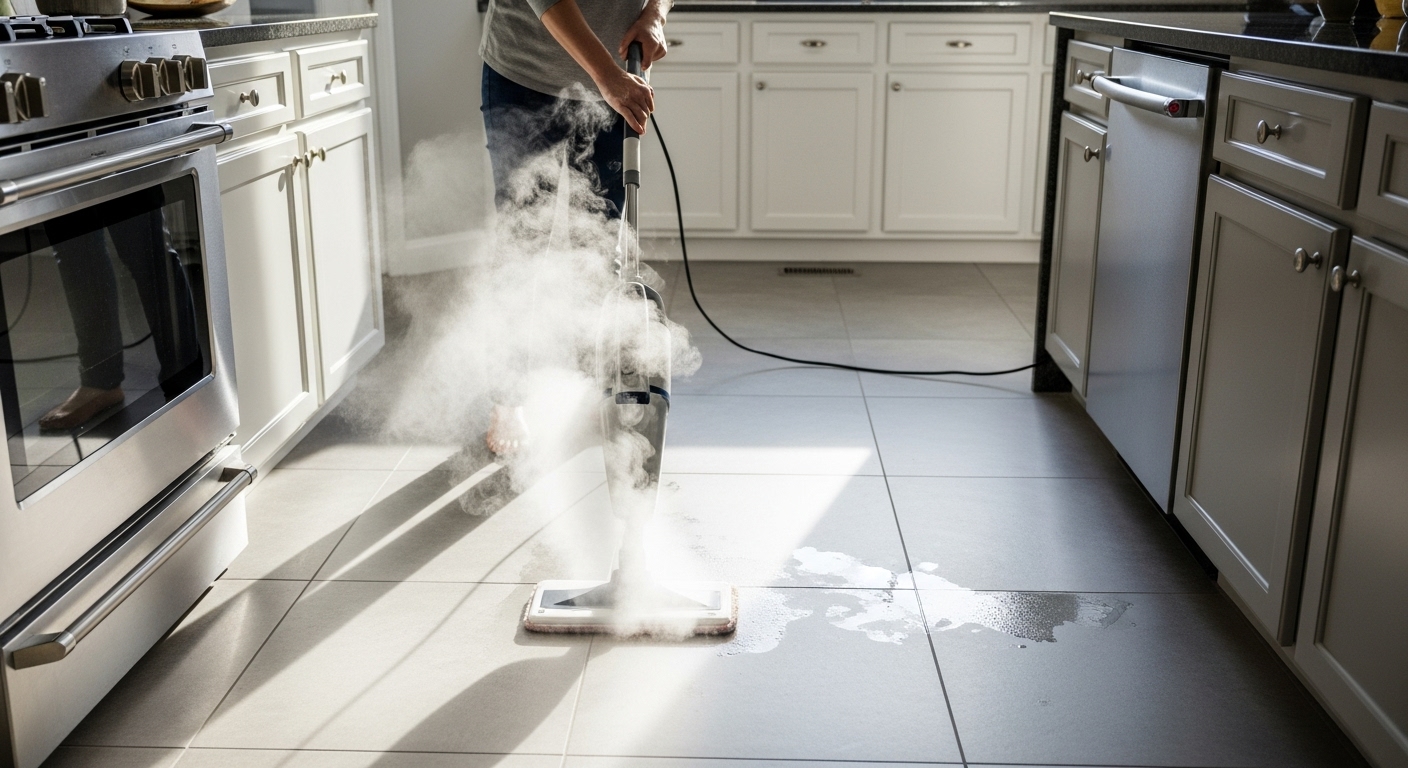
Sealed ceramic or porcelain tile
- Steam works great for stuck-on grime and dull film.
- Best results when you vacuum first and keep the pad clean.
Sealed stone tile (with caution)
- If the stone is properly sealed and in good condition, gentle steam can be okay.
- Natural stone is sensitive—always spot-test and keep steam moving.
Sealed vinyl (LVP/LVT/sheet vinyl) (only if manufacturer allows it)
- Many vinyl floors do fine with low steam and motion.
- Some can lift at edges or soften adhesives over time if overheated.
“Sometimes safe” (only if your floor maker explicitly approves)
Sealed hardwood
- Some manufacturers allow steam; many do not.
- Even sealed wood can be vulnerable at seams if you linger.
Steam-approved laminate
- Most laminate is not steam-safe.
- If yours is explicitly steam-rated, use minimal steam and quick passes.
Avoid steam (high risk)
Unsealed hardwood / waxed floors
- Steam can push moisture into wood and ruin the finish.
Unsealed natural stone (marble, limestone, travertine)
- Can etch, haze, or damage the surface/sealer.
Peel-and-stick vinyl / older sheet vinyl with weak seams
- Heat can soften adhesive and cause curling.
Any floor with lifting seams, cracks, or water damage
- Steam will make existing problems worse.
Quick rule that keeps you safe:
If your floor has seams and you’re not sure it’s steam-approved, don’t steam it. Use a spray mop instead.
2) Safe Setup Before You Steam (2 minutes)
Vacuum or sweep first (always)
Steam + grit = streaks and micro-scratches (especially on vinyl and laminate-look floors).
A quick vacuum pass makes steam cleaning look dramatically better.
Use the right pad
- Microfiber pads are best for most floors.
- Swap to a clean pad mid-clean if it gets visibly dirty.
Start with low steam
If your mop has settings, start low. You can always increase if needed.
Keep it moving
Steam is safest when it’s a moving, light pass, not a “hold and cook.”
3) How to Steam Mop Properly (Technique That Prevents Damage)
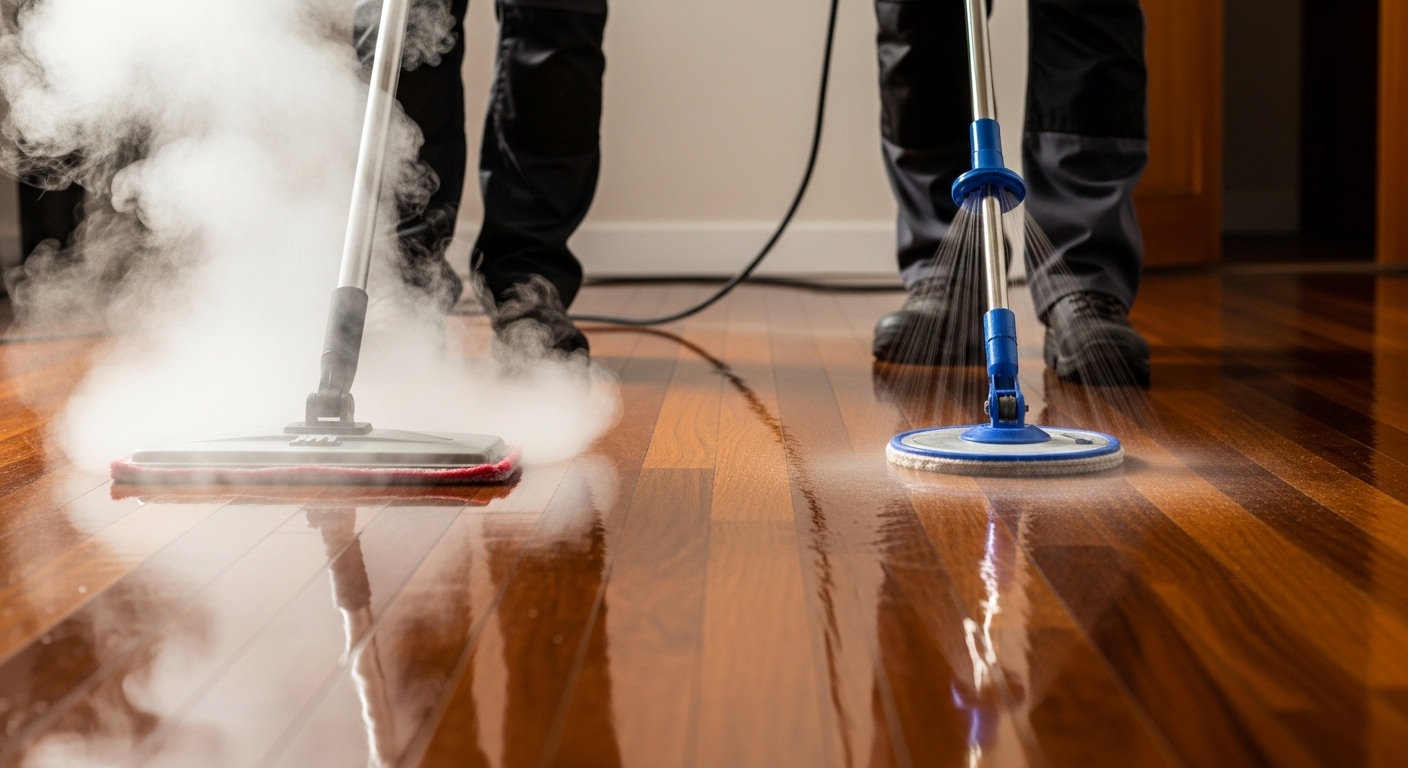
The safe pass method
- Make a slow pass over a small section (about 3×3 ft / 1×1 m)
- Keep the head moving—no lingering
- Do a second pass only if needed
- Dry the area with the mop pad (or a dry cloth) if you see moisture left behind
For sticky spots
Don’t hold the steam mop in place. Instead:
- Hover for 1–2 seconds max (if your mop allows)
- Then scrub with short, gentle strokes
- Repeat once rather than cooking the surface
For grout lines (tile only)
- Use a slightly slower pass
- Change pads more often (grout grime fills pads fast)
4) Descaling Routine: Keep Steam Strong and Prevent Clogs
Mineral buildup from hard water is the #1 reason steam mops lose performance or spit water.
The safest approach (best for most people)
Use distilled water regularly.
This reduces scaling dramatically and makes the whole routine easier.
If you need to descale (general routine)
Because descaling rules vary by brand, the safest method is gentle and minimal:
Option A: Manufacturer descaler (best)
If your brand sells a descaling solution, use that—lowest risk to seals and internal parts.
Option B: Mild vinegar descale (only if your manual allows it)
If permitted, a mild mix is usually:
- 1 part white vinegar : 2 parts distilled water
Steps
- Unplug and let the mop cool completely
- Empty the tank
- Fill with the vinegar mix
- Let it sit in the tank 15–30 minutes (don’t leave it for hours)
- Run steam briefly over a sink/towel area
- Empty and rinse tank thoroughly
- Run 1–2 full tanks of distilled water through to flush
Important cautions
- Don’t use strong vinegar mix (can damage seals over time)
- Don’t descale too frequently if you’re already using distilled water
How often to descale
It depends on your water:
- Hard water + tap water use: every 3–6 weeks
- Moderate water: every 6–10 weeks
- Mostly distilled water: rarely (only if performance drops)
Signs you need descaling
- Steam output feels weaker
- Mop spits droplets or leaves wet trails
- Heat-up time gets longer
- You see white mineral flakes or crust around the tank/valve area
5) After-Use Routine (Prevents Smells + Extends Pad Life)
After every use
- Unplug and let cool
- Remove pad immediately (don’t leave damp pad on the head)
- Rinse pad or toss into laundry basket
- Empty the tank if your manual recommends it
- Leave the tank cap open to air dry (prevents odor)
Weekly
- Wash pads (no fabric softener—reduces absorbency)
- Wipe the mop head and tank area
6) Simple Do / Don’t List (Save This)
DO
- Do vacuum/sweep first
- Do start on the lowest steam setting
- Do keep the mop moving
- Do change pads often (dirty pad = streaks)
- Do use distilled water if possible
- Do test a hidden area if you’re unsure
- Do dry-seal edges and seams (avoid lingering)
DON’T
- Don’t use steam on unsealed hardwood, waxed floors, or unknown laminate
- Don’t hold the steam mop in one spot
- Don’t overfill the tank
- Don’t add cleaners, essential oils, or fragrances to the tank unless the brand allows it
- Don’t skip pad washing (dirty pads cause haze and smell)
- Don’t store it with a wet pad attached
- Don’t steam floors with lifting seams or existing water damage
Quick FAQ
Can I put floor cleaner in the water tank?
Usually no unless the manufacturer explicitly allows it. Many steam mops are designed for water only, and additives can clog internals.
Why does my floor look streaky after steam mopping?
Most often: you didn’t vacuum first, the pad was dirty, or you used too much steam in one area.
Is steam safe for laminate “if I keep moving”?
Not always. Moisture can still penetrate seams over time. If the manufacturer doesn’t approve steam, avoid it.