Both steam mops and spray mops can leave floors looking great… or leave them streaky and dull. The “better” option depends less on hype and more on your floor type, how dirty it gets, and how much moisture your floors can safely handle.
Here’s a real-life comparison for tile, vinyl, and laminate, with clear pros/cons and the best choice for most homes.
Quick answer (fast decision)
- Tile (ceramic/porcelain): Steam mop usually cleans better for grime + grout haze.
- Vinyl (LVP/LVT/sheet vinyl): Spray mop is usually safer and more consistent day-to-day. Steam is okay only if vinyl is rated steam-safe and you use it carefully.
- Laminate: Spray mop is the safer default. Steam can cause swelling or seam damage if overused or if seams aren’t perfectly sealed.
What each mop actually does
Steam mop
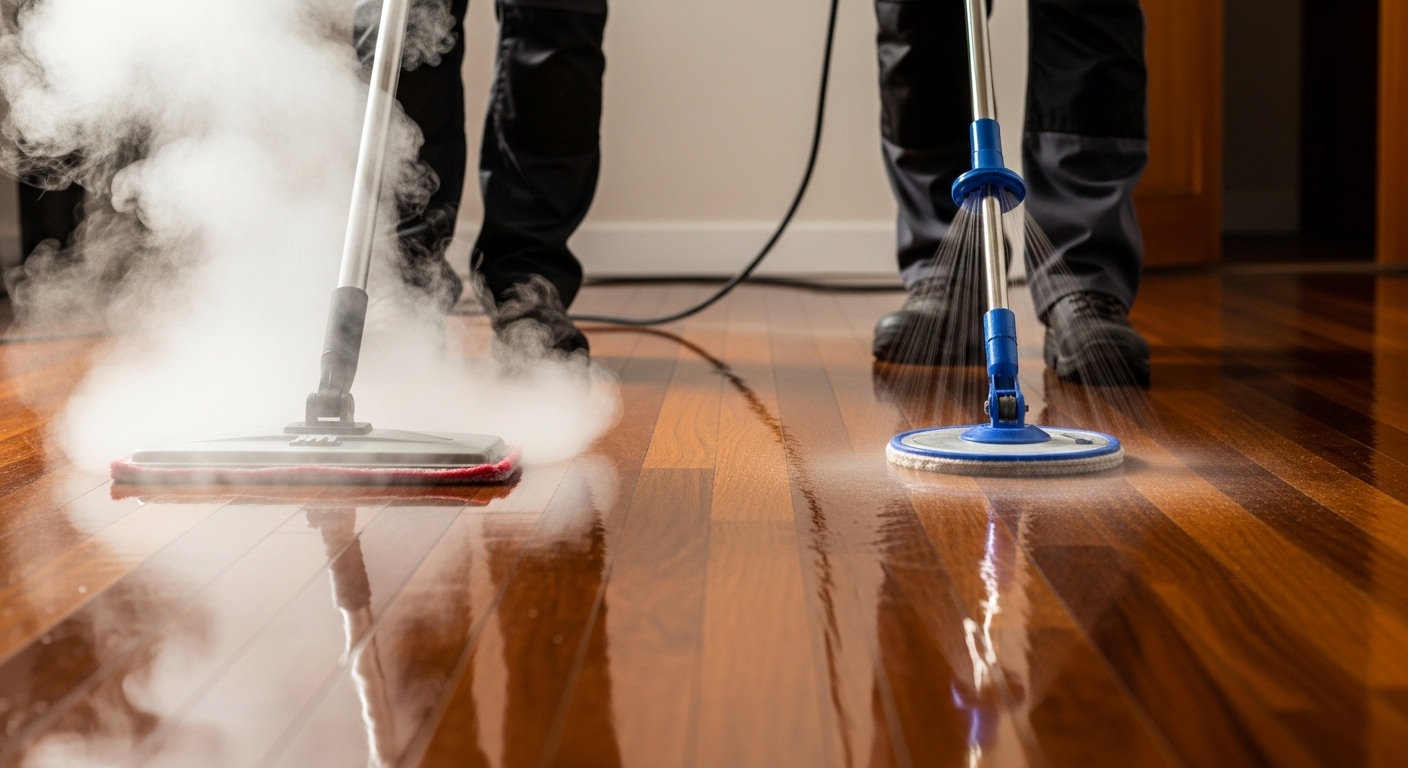
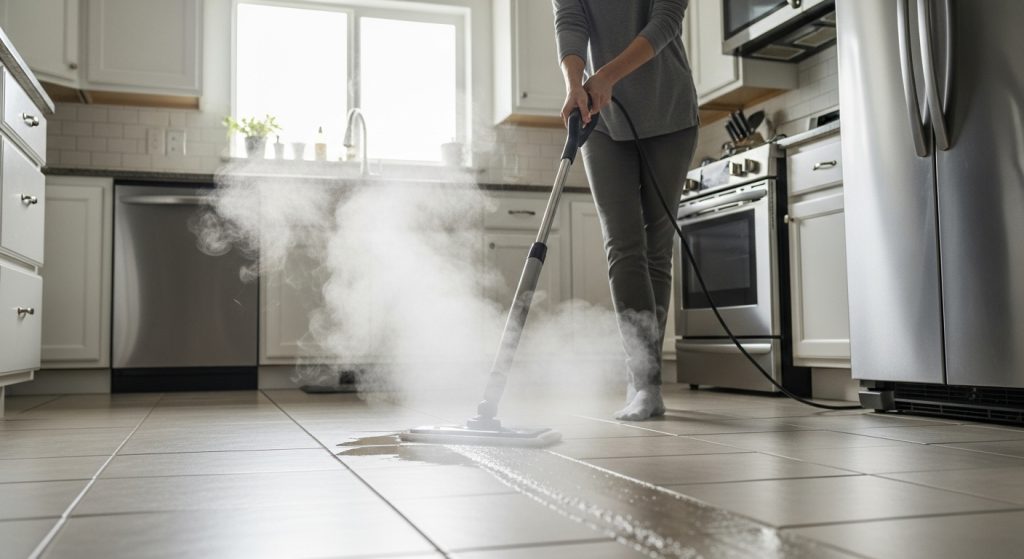
Uses heat + moisture to loosen stuck-on residue and sanitize-ish surfaces (it reduces germs, but it’s not a medical sterilizer). It’s best when your problem is sticky grime, not just dust.
Spray mop
Applies a controlled fine mist of cleaner/water and wipes it up with a reusable pad. It’s best for everyday cleaning with low moisture—especially for floors with seams.
Pros & Cons (honest version)
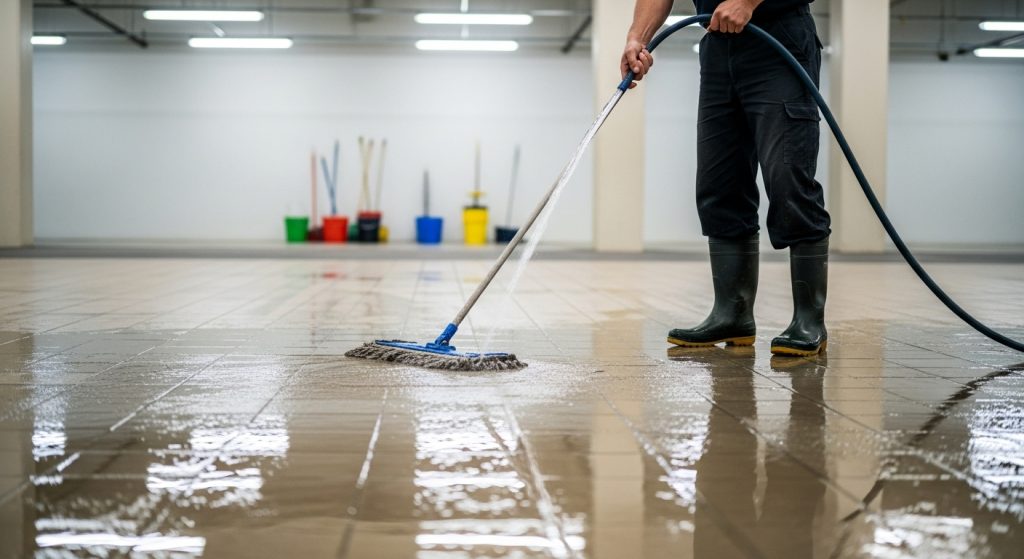
Steam Mop
Pros
- Great at loosening sticky grime (kitchen splatter, dried footprints)
- Can cut through residue without heavy chemicals
- Works well on textured tile and grout haze (with the right pad and technique)
Cons
- Too much heat/moisture can be risky for some floors (especially laminate)
- Can leave streaks if you don’t vacuum first or if the pad gets dirty fast
- Not ideal for waxed floors or unsealed surfaces
- You still have to change pads often—dirty pad = smear city
Spray Mop
Pros
- Very controlled moisture (safer for vinyl and laminate)
- Easy “grab-and-go,” which means you use it more often
- Great for quick daily cleanups and spot cleaning
- Pads are easy to swap and wash
Cons
- Doesn’t break down sticky grime as easily as steam
- Some sprays leave residue if overused or if the cleaner isn’t compatible
- Requires good pad hygiene—old pads can spread dull film
Which is better by floor type?
1) Tile (ceramic/porcelain)
Best choice: Steam mop (most of the time)
Tile can handle moisture and heat better than most floors, and steam helps loosen:
- dried spills
- kitchen grease film
- bathroom buildup
It also helps with the “sticky tile” feeling people get from residue.
When spray mop is better on tile
- Your tile is already clean and you just want a quick refresh
- You have sensitive grout sealer and prefer minimal moisture
- You hate dealing with cords and pads mid-clean
Tile tip that changes results:
Vacuum/sweep first. Grit + steam = streaks and scuffing.
2) Vinyl (LVP/LVT/sheet vinyl)
Best choice: Spray mop (safer default)
Vinyl is generally water-resistant, but heat can be a wildcard. Some vinyl floors tolerate steam; others can soften adhesives or cause edge lifting over time—especially if you hold steam in one spot.
When steam mop is okay on vinyl
- The manufacturer explicitly says steam is safe
- You use low steam, keep moving, and don’t linger
- You avoid seams and edges with heavy steam
Vinyl tip that prevents haze:
Use less cleaner than you think. Many vinyl “streak problems” come from residue, not dirt.
3) Laminate
Best choice: Spray mop (almost always)
Laminate hates moisture in seams. Even if the surface looks dry, repeated steam use can force moisture into joints and cause:
- swelling
- edge lifting
- bubbling
You might not notice for weeks, then it shows up permanently.
When steam mop is acceptable (rare cases)
- The laminate is explicitly steam-approved by the manufacturer
- Seams are well sealed and you use minimal steam
- You keep the mop moving fast and use dry passes
Laminate tip that really matters:
Use a barely damp pad. If you can see moisture left behind, it’s too much.
What keeps floors cleaner in real life (the routine that works)
Most homes do best with:
- Spray mop for regular cleaning (low moisture, quick)
- Steam mop occasionally for tile (deep refresh, sticky grime)
If you have laminate or vinyl and you’re unsure about steam safety, a spray mop routine is the most reliable long-term.
Common mistakes (and how to avoid them)
- Using steam on laminate “because it feels dry after” → moisture can still get into seams
- Not vacuuming first → grit gets pushed around, leaving streaks/scratches
- Reusing dirty pads too long → you’re spreading a film
- Too much cleaner in a spray mop → residue haze, especially on vinyl
- Holding steam in one spot → risk for vinyl edges and adhesives
Best overall choice (if you want just one mop)
✅ Spray mop
It’s more universally safe across tile, vinyl, and laminate, and people use it more often—so floors stay cleaner day-to-day.
Best “add-on” choice (if you already have a spray mop)
✅ Steam mop for tile-only deep refresh
Use it when the tile feels sticky or looks dull from buildup.