Pet stains are annoying. Pet odor is worse—because if you can still smell it, your pet can definitely smell it, and that’s how “repeat accidents” happen. The right remover isn’t about “strong scent.” It’s about using the right chemistry for the mess.
This guide breaks down enzyme vs oxygen cleaners (what they actually do), then ranks five top pet stain & odor removers with honest pros/cons and real-life tips that help you get better results.
Affiliate Disclosure: As an Amazon Associate, I earn from qualifying purchases.
Enzyme vs Oxygen: What’s the difference (and why it matters)?
Enzyme cleaners (best for urine + organic odors)
Enzyme formulas use biological enzymes/bacteria to break down organic material—think urine, feces, vomit, food proteins.
Best for: cat urine, dog urine, repeat-marking spots, old “mystery smells,” upholstery odors.
Important: enzymes need time + moisture to work. If you spray and wipe immediately, you often won’t get full odor removal.
Oxygen cleaners (best for visible stains + brightening)
Oxygen-based cleaners (often “oxygen power” / peroxide-style action) help lift stains and discoloration and can brighten fabrics.
Best for: visible yellowing, old stain shadows, high-traffic grime, lightening stain rings.
Caution: oxygen action can be stronger on dyes. Always spot-test on delicate fabrics or darker carpets.
Quick rule that works in real life
- Odor problem (especially urine): choose enzymes
- Stain problem (looks bad but doesn’t smell much): oxygen
- Worst-case spots (stain + odor): enzymes first, then oxygen after it fully dries
How to actually remove pet stains (the method most people skip)
- Blot first (paper towels, press down—don’t rub)
- Soak the area enough to reach what’s underneath (urine sinks into carpet pad)
- Let it dwell (enzymes need time; don’t rush)
- Blot/extract again (more dry passes than wet passes)
- Air dry fully and keep pets away until dry
- If odor remains: repeat. Old spots often take 2 rounds.
Top 5 Best Pet Stain & Odor Removers
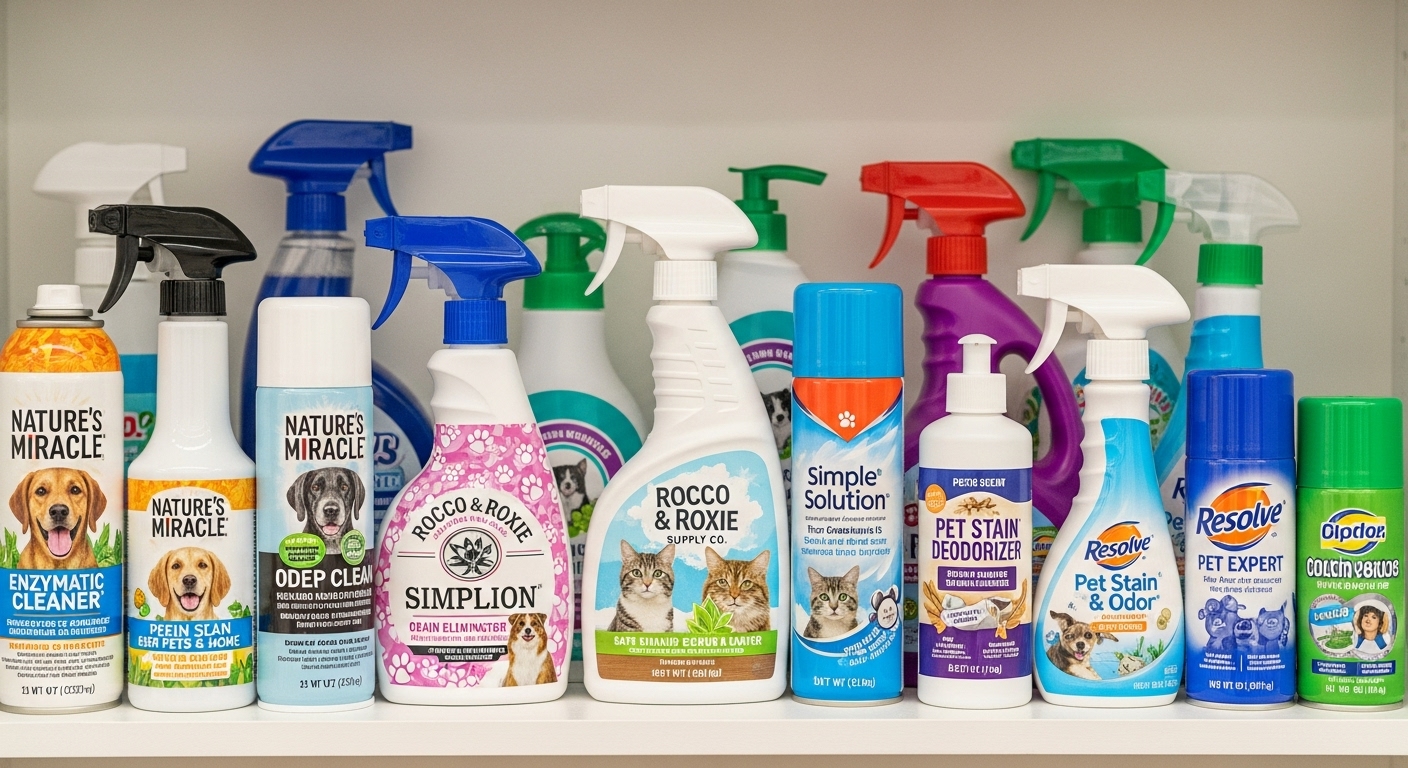
1) Rocco & Roxie Extreme Stain & Odor Eliminator (Enzyme Spray)
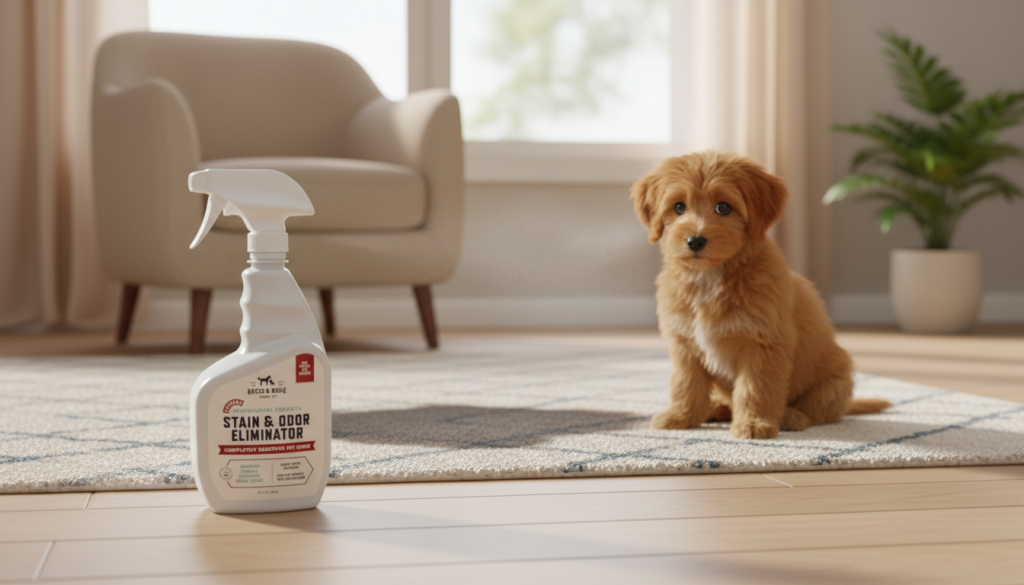
Overview
This is a classic enzyme-style spray designed for pet messes where odor control is the main goal. It’s the type of product people reach for when a spot looks “fine” but the smell lingers—or when a pet keeps returning to the same area.
Best for
- Cat urine and dog urine odor
- Repeat accidents / marking zones
- Upholstery, rugs, carpet, pet beds
Notable strengths
- Enzyme action aimed at breaking down organic odor sources
- Works best when you fully saturate the affected area and give it time
Pros
- Strong odor-focused approach (great for “it still smells” situations)
- Practical for both fresh accidents and older odor spots
- Easy spray format for quick response
Cons
- Needs dwell time—quick wipe-offs won’t deliver full results
- Like most enzyme cleaners, may require a second round on deep pad stains
Real-life tip
If the smell is in carpet padding, spray wider than the visible spot and cover with a towel for a while to keep it slightly damp so enzymes can keep working.
2) ACTIVE Pet Odor & Stain Eliminator (Enzyme Cleaner Spray)
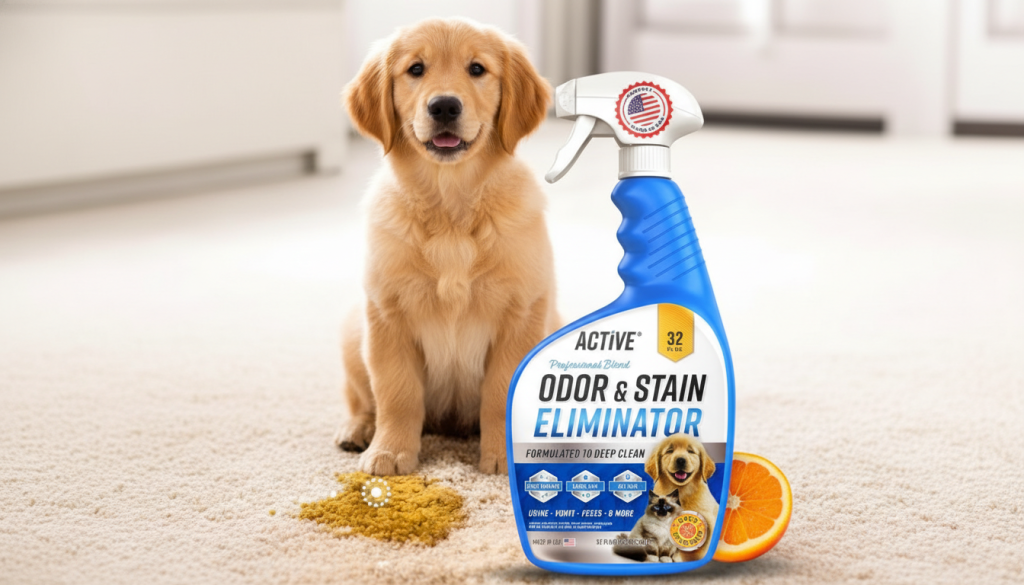
Overview
Another enzyme-first option that’s typically chosen for serious odor removal across multiple pet mess types. This category is ideal when you want one bottle that can handle urine plus other organic messes.
Best for
- Multi-pet homes (recurring accidents happen)
- Mixed messes (urine + vomit + food)
- Odor prevention in “hot zones” (entry rugs, litter areas)
Notable strengths
- Enzyme-style formula aimed at odor sources, not masking
- Often works best with saturation + patience
Pros
- Great “general purpose” enzyme approach for pet homes
- Good fit for routine odor maintenance (not just emergencies)
- Useful for upholstery and fabric surfaces where odors cling
Cons
- Requires proper dwell time and repeat applications for old stains
- Fabric types vary—spot-test on delicate materials
Real-life tip
For couches or mattresses: apply lightly, let it sit, then press with a dry towel repeatedly. The “press and lift” method beats scrubbing every time.
3) Carpet Cleaner & Deodorizer for Pets — Stain & Odor Treatment (Enzyme-Based)
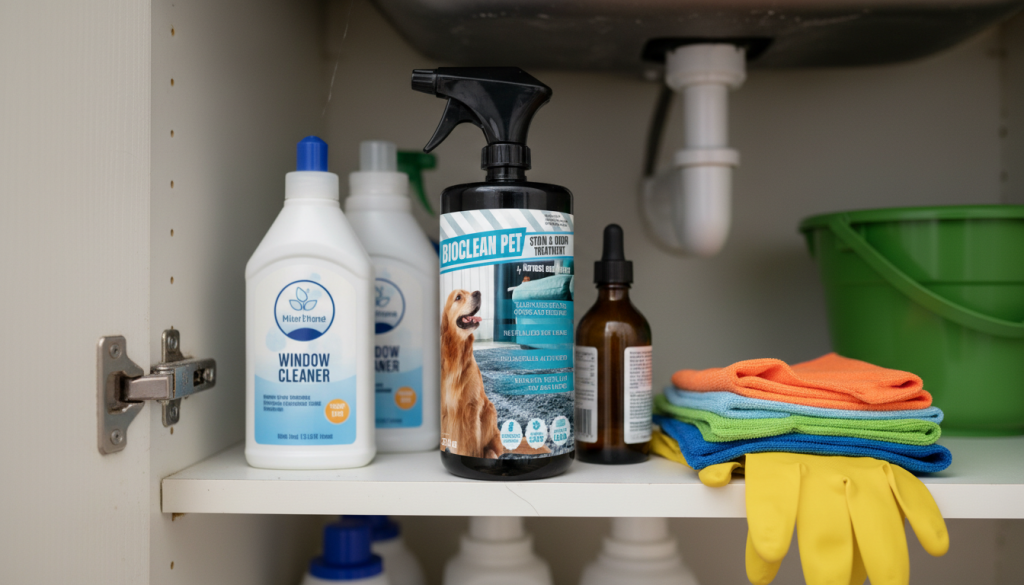
Overview
This is positioned as a pet-specific carpet deodorizer/cleaner designed to neutralize urine odors and tackle common pet stains. It’s a good match if your priority is carpet and rug odor control in areas pets frequent.
Best for
- Area rugs and carpeted rooms
- “Dog corner” smells, litter box room odors
- Regular deodorizing with targeted stain work
Notable strengths
- Pet-focused stain + odor treatment
- Often ideal for routine use in high-risk rooms
Pros
- Good for recurring carpet odor control
- Simple spray-and-treat workflow
- Helpful for fresh accidents when used quickly
Cons
- Deep, old urine in padding may still need multiple treatments
- Always follow fabric care guidelines and spot-test first
Real-life tip
On rugs: lift the rug and treat the underside too if the accident soaked through. Odor often hides underneath even after the top looks clean.
4) Whip It Cleaner Multi-Purpose Stain Remover (Plant-Based Enzyme Cleaner)
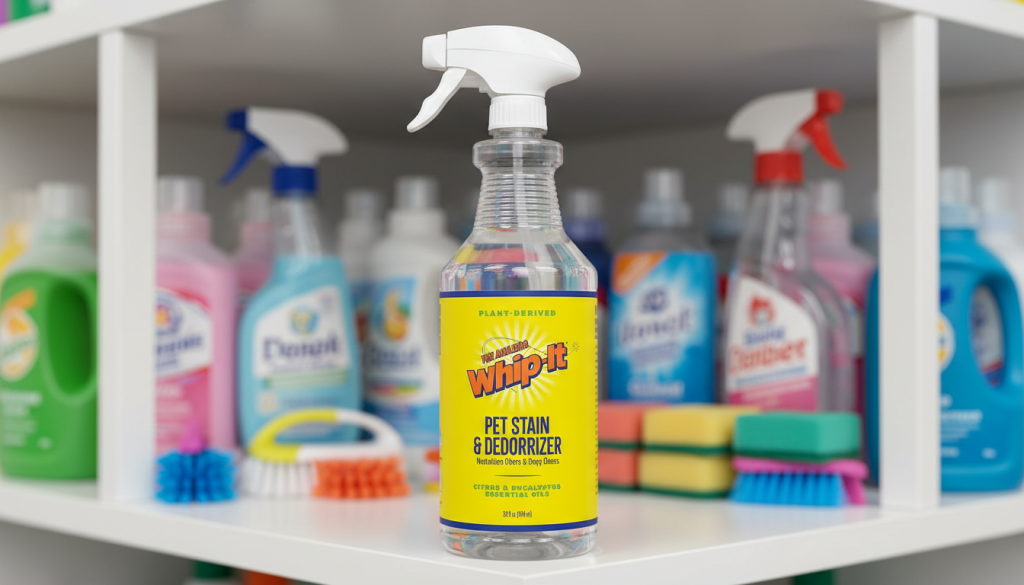
Overview
This one leans toward a multi-surface, plant-based enzyme approach—great if you want something that can handle everyday stains and pet messes while still focusing on breaking down organic gunk.
Best for
- Daily spot cleanups (small accidents, paw prints, food spots)
- Upholstery and fabric touch-ups
- Homes that want a more multi-purpose cleaner style
Notable strengths
- Enzyme-based stain removal angle
- Often convenient for frequent, smaller cleanups
Pros
- Versatile: good for pet messes + general household stains
- Easy to keep in a “cleanup station” for fast response
- Works well for surface-level accidents caught early
Cons
- For heavy urine odor in padding, you’ll likely want a stronger, saturation-style enzyme treatment
- Needs dwell time for best results
Real-life tip
If a stain is fresh: blot first, then spray, then wait. If you spray onto a wet puddle without blotting, you dilute the cleaner and reduce effectiveness.
5) Rocco & Roxie Stain & Strong Odor Eliminator (Enzyme Concentrate Drops)
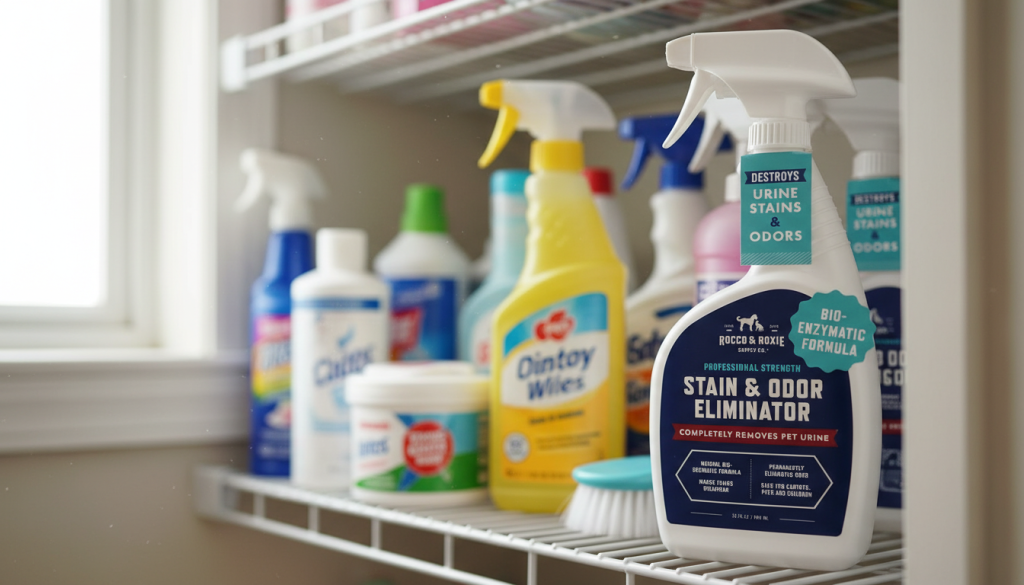
Overview
A concentrated “drop” format is great when you want custom strength (stronger for heavy odors, lighter for routine cleaning) or you prefer mixing for repeated treatments and larger areas.
Best for
- Repeat-treatment households (multiple messes per week)
- Larger areas (rugs, repeated carpet sections)
- People who like concentrate control
Notable strengths
- Concentrated format for flexible mixing
- Practical for ongoing pet odor routines
Pros
- Flexible: mix what you need, when you need it
- Great for multi-room use without going through sprays quickly
- Useful for deep-clean routines and re-treating stubborn spots
Cons
- Requires mixing and a bottle/sprayer setup
- Results still depend on correct saturation and dwell time
Real-life tip
Keep a labeled spray bottle mixed for “daily strength,” and mix a stronger batch only when you’re dealing with true urine odor or repeat marking.
Which type should you buy? (Simple decision guide)
Choose an enzyme cleaner if you have:
- Cat urine odor (especially repeat marking)
- Odor that comes back after “cleaning”
- Upholstery smells, pet beds, rugs that hold funk
- Old stains with a lingering smell
Choose an oxygen cleaner if you have:
- Visible stains/yellowing that won’t lift
- Old stain shadows (but minimal odor)
- High-traffic dinginess you want to brighten
Best combo approach for the toughest spots
- Enzyme treatment (full dwell time)
- Let it dry completely
- Follow with an oxygen cleaner if a stain shadow remains
Common mistakes that make pet odors come back
- Not soaking deep enough (urine reaches padding; surface cleaning won’t remove odor)
- Rushing enzymes (wiping too early)
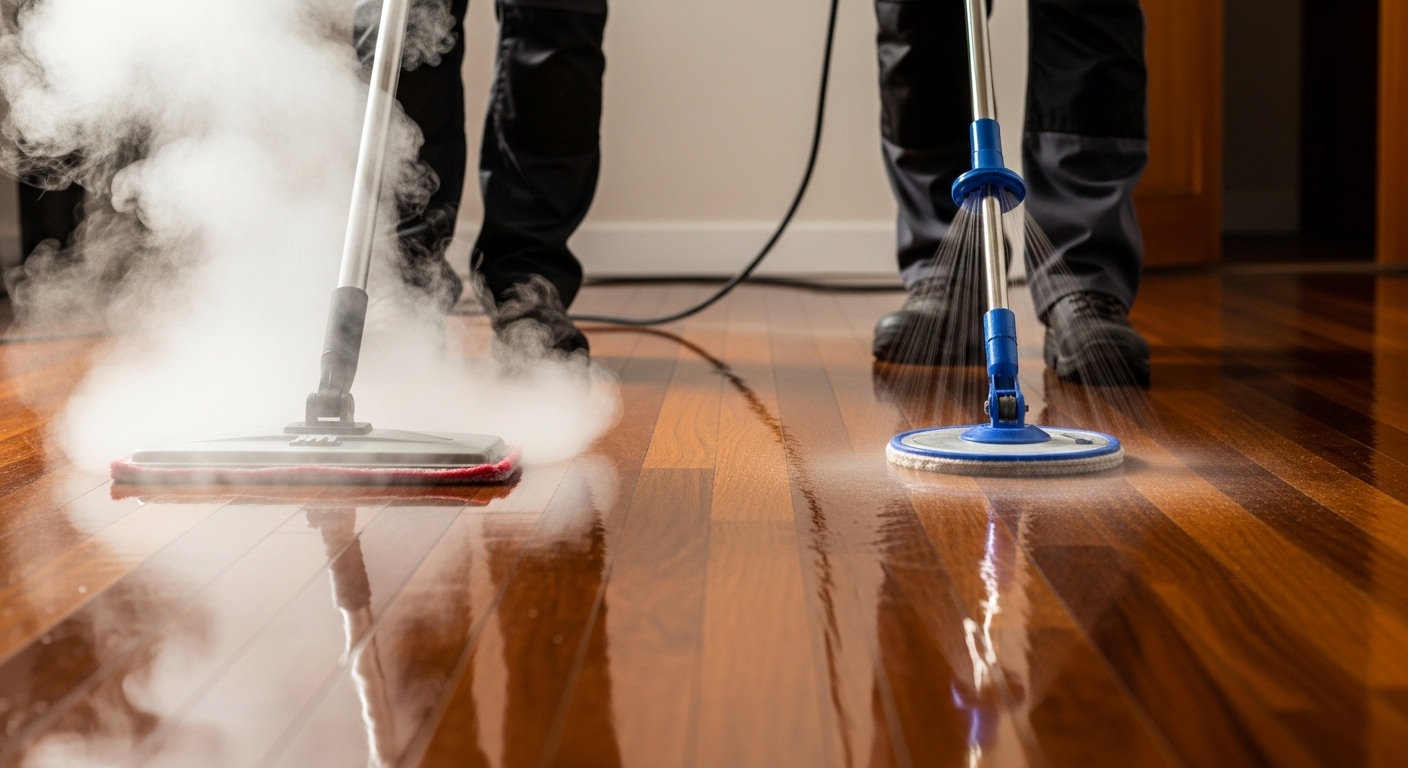
- Using heat too soon (steam/heat can set protein stains and lock odors)
- Overusing scented products (masking odor doesn’t stop repeat accidents)
- Skipping the underside of rugs/cushions (odor lives underneath)
Safety + surface tips (quick but important)
- Always spot-test on a hidden area first
- Don’t mix cleaners (especially with bleach or ammonia products)
- Keep pets away until fully dry
- For hardwood: use minimal moisture and wipe dry quickly (avoid soaking seams)